Money feels lighter
when your financial house is structurally sound.
I help professionals and expats design financial structures that build resilience, protect what matters, and support long-term freedom — even when life takes unexpected turns.
Not just technically optimised plans, but decisions you can emotionally sustain.
Who Am I?
I’m Cammie — a Resilience Wealth Architect.
Before entering financial advisory, I spent over a decade as an architect, designing buildings with solid foundations, adaptable structures, and longevity in mind. That way of thinking now shapes how I approach financial planning.
I work with professionals and expats in Singapore who want more than products or projections. They want financial decisions that hold up under real life — through uncertainty, transitions, and changing priorities.
My work focuses on designing clear, well-structured financial systems so your money supports your life, instead of becoming another source of pressure.
Structure creates calm. From there, freedom becomes possible.
My Story
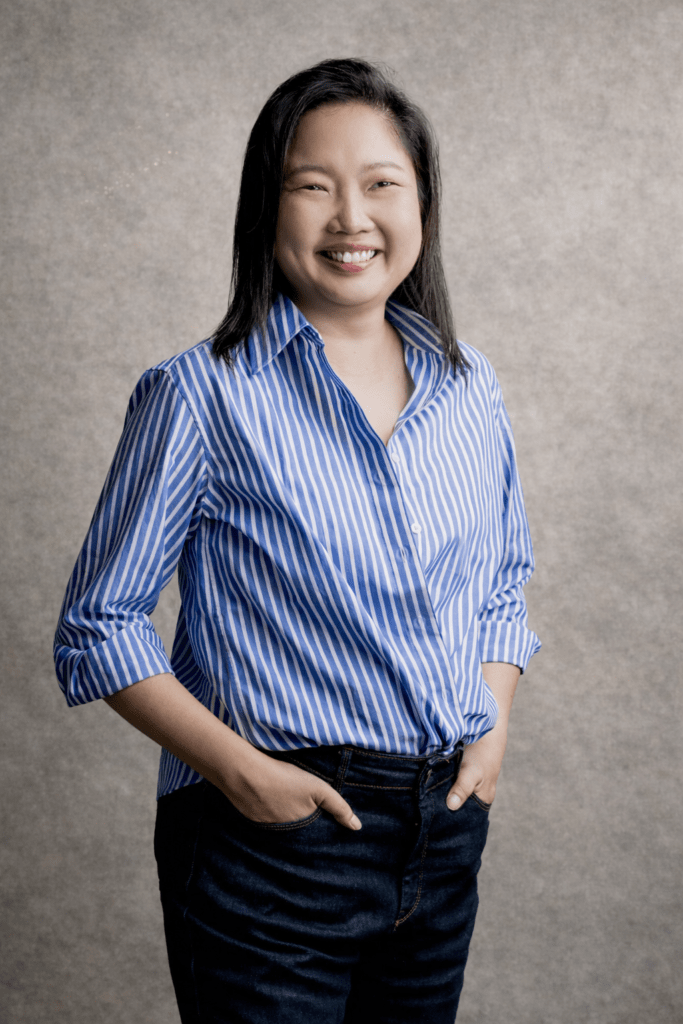
“I am extremely thankful that I was given a second chance in life. Had it not been my own basic DIY financial plan then, things would have been very much different today.”
In my twenties, an unexpected health crisis disrupted everything I thought I knew about stability, work, and security. Plans I had assumed were solid no longer held, and I had to confront a reality many people only consider in theory — that life can change suddenly, and without warning.
That period forced me to rethink what resilience really means. Not just physically or emotionally, but financially. I saw clearly that income alone is fragile, and that true security comes from having structures in place that can hold you when circumstances shift.
Before entering financial advisory, I spent over a decade as an architect, designing buildings with strong foundations, adaptable systems, and longevity in mind. Through my own experience, I realised that financial planning requires the same discipline: thoughtful design, contingency planning, and respect for real-world conditions — not ideal scenarios.
That understanding led me to transition into financial advisory, where I now apply architectural thinking to wealth planning. My work is focused on helping individuals and families build financial structures that protect what matters, support long-term decisions, and remain functional even during periods of uncertainty.
Resilience, to me, is not about predicting every risk. It’s about designing systems that allow you to move forward with clarity and confidence, knowing that your financial life is built to withstand change.
Having rebuilt my own life with intention, I approach financial planning with care, precision, and deep respect for uncertainty.
My Investment Journey
Before entering the financial industry, I was a retail investor navigating markets largely on my own. Over the years, I explored a range of asset classes — including equities, ETFs and REITs, property-related investments, dual currency strategies, and structured deposits — and experienced firsthand both the opportunities and the pitfalls that come with investing without a clear framework.
What stood out most to me was not the lack of products, but the lack of reliable, structured guidance for long-term decision-making. Information was abundant, yet clarity was scarce. I learned that outcomes depend less on chasing ideas, and more on understanding risk, alignment, and how different components work together over time.
Today, with access to established platforms, professional tools, and trusted partners, I approach investing from a structural perspective. My role is not to promise returns, but to help clients make informed investment decisions within a coherent financial framework — one that aligns with their life stage, priorities, and tolerance for uncertainty.
Sound investing, to me, is not about prediction. It’s about building portfolios that can be understood, monitored, and sustained over the long term.
My Investment Beliefs

I don’t believe investing should feel rushed, opaque, or anxiety-driven.
At its best, investing is a long-term design exercise — one that supports your life, rather than competes with it.
The principles that guide my work are simple:
1. Structure comes before strategy.
Before deciding what to invest in, it’s more important to understand how your financial life is structured. Without a clear framework, even good strategies can feel unstable.
2. Clarity reduces emotional cost.
Investments should be understandable. When people know how and why their portfolios are constructed, they make calmer decisions — especially during periods of uncertainty.
3. Sustainability matters more than optimisation.
A plan that looks good on paper but is hard to maintain rarely works in real life. The best investment approach is one you can stay with through different market conditions and life stages.
4. Risk should be acknowledged, not avoided or hidden.
Risk is a natural part of investing. The role of planning is not to eliminate it, but to size, position, and manage it thoughtfully within the broader financial structure.
5. Financial decisions should support the life you want to live.
Investing is not an end in itself. It exists to support your priorities — family, security, freedom, and peace of mind — over time.
These principles guide how I think — not what you must do.
Professional Background

I am a licensed financial advisory representative in Singapore, working within regulatory and professional standards.
My background in architecture shapes how I approach financial planning — with an emphasis on structure, longevity, and real-world usability rather than short-term optimisation.
This perspective naturally extends to estate and legacy planning. Beyond building wealth, I help clients consider how their financial structures will function across life transitions — including incapacity, succession, and the transfer of responsibilities and assets.
I work with established platforms and professional partners to design financial structures that remain coherent, intentional, and supportive — not just for today, but for the people and purposes they are meant to serve over time.
Giving Back
I believe that financial planning carries a responsibility beyond individual outcomes.
Strong financial structures don’t only support personal security — they also shape how resources are stewarded, shared, and sustained across communities and generations. In my work, I remain mindful of the broader impact that thoughtful planning can have, especially for those who may not have access to the same clarity or support.
Where appropriate, I contribute time and resources to causes aligned with education, resilience, and long-term well-being. These efforts are not separate from my professional work, but a quiet extension of the same principles — structure, care, and continuity over time..